The Panasonic LUMIX GH4 is an undeniably amazing camera, especially for its video capabilities. It was the first consumer 4K cameras to bring high quality video and handy features like focus peaking and slow motion. The competition has since caught up and we’re expecting its successor, the GH5, to be announced at Photokina 2016. There have already been rumors about the GH5 specifications, but until they get confirmed, we will focus here instead on our personal GH5 feature wishlist.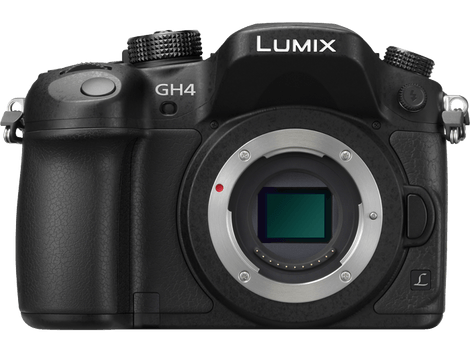
More megapixels
New cameras are always expected to come with more megapixels than the previous model. A higher megapixel count doesn’t automatically mean better images or videos, but it certainly adds flexibility with cropping and allows for bigger prints. The GH4 has a 16 megapixel sensor and an increase in resolution for the GH5 would be welcomed, but only if there is no further compromise with the video crop factor,. More about the crop factor later.
Less video noise
The GH4 has been criticized for not delivering the best low light performance when using a sensitivity around 1600 and 3200 ISO. This is why, we would like to see a GH5 with better low light performance of at least 1 ISO level.
Faster autofocus
Let’s be honest, regarding autofocus, nothing currently even comes close to Canon’s DPAF system implemented in DSLRs like the popular Canon 70D. Unfortunately, with Canon holding the patent for DPAF, most manufacturers aren’t at leisure of using the technology. The GH5 won’t have DPAF, but we still hope that Panasonic will find a way to focus faster and more accurately than with the GH4.
Smaller 4K video crop factor
A Micro Four Thirds sensor has a 2x crop factor when comparing to full-frame. Furthermore, the GH4 doesn’t use the whole sensor to record 4k, it uses a zone of 3840×2160 pixels of its sensor to record video from. That brings the crop factor to 2.3x when recording 4k.
This affects mostly ultra wide-angle shots., fow which lenses are never wide enough with such a crop factor. The best way with the GH4 to counteract the crop factor is to use a Metabones Speed Booster XL 0.64x adapter, and while that adapter helps a lot, we wish The GH5 helped a little further by having a video crop factor of only 2x.
In body 10 bit 4:2:2 recording
When recording to the memory card, the GH4 will output 8 bit 4:2:0. But for advanced color grading, 10 bit 4:2:2 is definitely preferred. The only way to achieve this with the GH4 is to record the HDMI output to an external recorder, which incurs setup cost and weight. If the GH5 records 10 bit 4:2:2 internally, that would make the video production process faster, easier and cheaper. This is why, we are very excited that in body 10 bit 4:2:2 recording is one of the rumored new features for the GH5.
More video monitoring features
The GH4 already boasts very useful video monitoring features like focus peaking and zebra patterns. One visualization that we would really love to see in the GH5 is false colors. It’s a great tool to make sure that you don’t clip your shadows or highlights, to check skin exposure and where your midtones are. On top of that, featuring waveform or vectorscope visualizations would round up the monitoring features.
4K at 60 fps
Currently, only professional grade cameras can record 4k at 60fps. The GH5 would be the proud successor of the GH4 if it became the first consumer grade camera to support 4k at 60fps. Ironically, 4k is still not widespread on TV or YouTube, especially at 60 fps for bandwidth and playback performance reasons. However you can bet that 4k at 60fps will become more accessible soon, and the GH5 would be future-proof if it supports that format.
Recommended gear for the GH4/GH5
A very popular GH4 combination is Panasonic LUMIX GH4 + Metabones Speed Booster XL 0.64x adapter + Sigma 18-35mm F1.8 Art DC HSM Lens for Canon, and odds are it will remain a great combination with the GH5.
If you prefer to get a quality Micro Four Thirds lens, check the Rokinon 12mm F2.0. YouTube channels use it to create great wide angle shots.
If you are serious about post processing and you need the best quality recordings from your GH4, we would also recommend the Atomos Ninja 2 or the Atomos Ninja Blade (bigger and better screen) for Full HD recording, and the Atomos Ninja Flame or Atomos Shogun Flame for 4K. For the GH5 however , as explained above, check first whether it already records the better quality format internally and how it fares against those external recorders. If the GH5 still can’t do 4k at 60fps, you should check the Atomos Shogun Inferno around the end of 2016.